
The Origin Story
By Rosie Hall, founder The Rogue Room
The Origin Story
by Rosie Hall
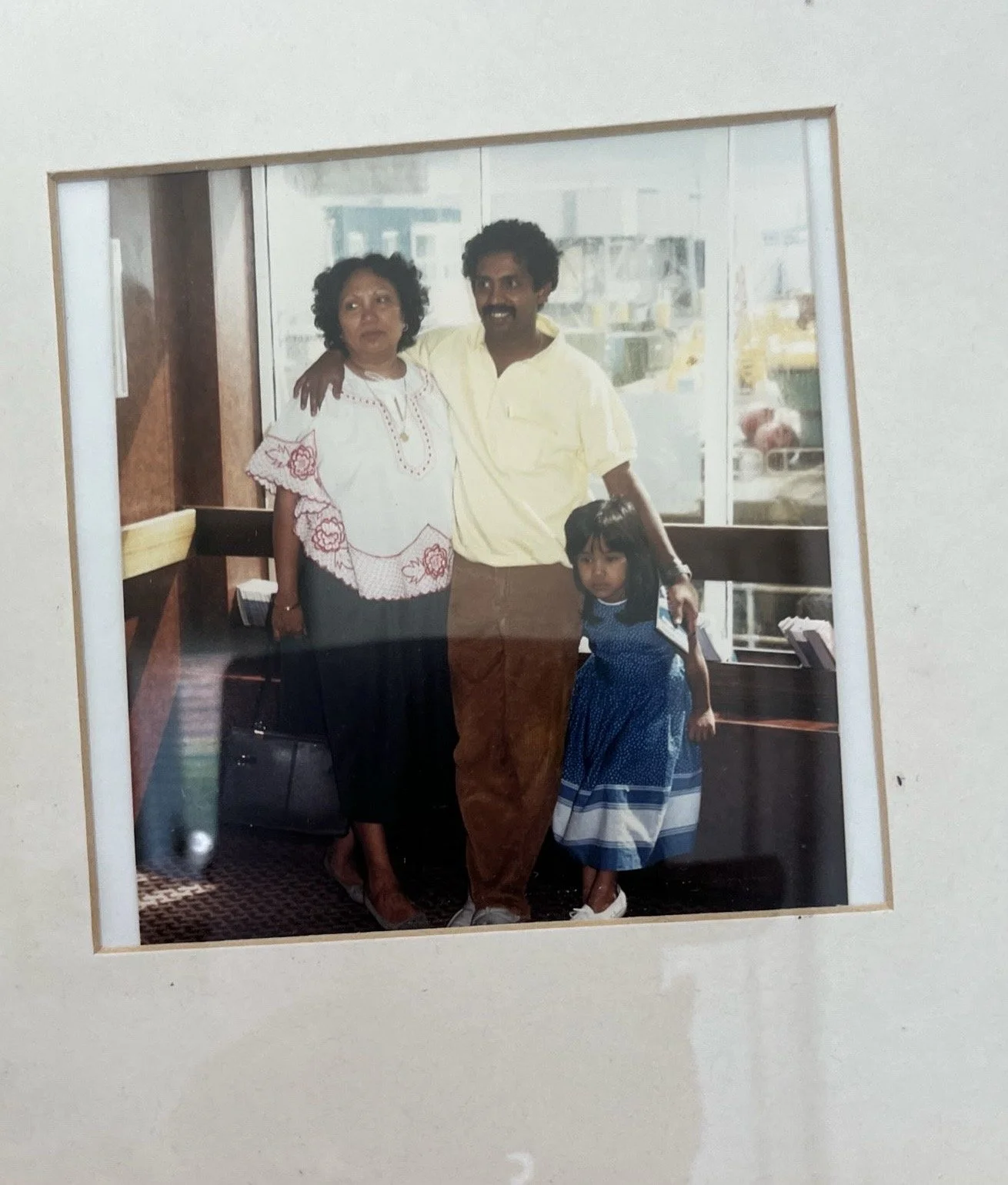
I grew up the only child of a working-class South Asian family in a predominantly white, middle-class town. I was always the outsider. Not dramatically. Quietly. The kind of outsider that learns to read the room before walking into it.
My mother knew that feeling too. She came to the UK from Sri Lanka with almost nothing and built a life through relentless work as a civil servant supporting us here while helping support family back home at the same time. Two countries, one woman, no fuss. My father was the opposite energy: magnetic, social, the kind of person who could make anyone feel like a friend within minutes. But beneath it all was the understanding that belonging was never guaranteed.
We were called names. We grew up with very little money in an area where wealth was impossible to ignore. That kind of environment teaches you resilience early. It also teaches you what it feels like to exist slightly outside the room. Every rebellion has a precedent.
Mine was a Sri Lankan curry at our kitchen table.
My mother knew that feeling too. She came to the UK from Sri Lanka with almost nothing and built a life through relentless work as a civil servant supporting us here while helping support family back home at the same time. Two countries, one woman, no fuss. My father was the opposite energy: magnetic, social, the kind of person who could make anyone feel like a friend within minutes, perhaps the only way he was accepted. But beneath it all was the understanding that belonging was never guaranteed.
The dancefloor
The first place I ever felt belonging was a nightclub. After years of feeling like the odd one out, club culture gave me something I hadn't experienced before: freedom without permission. Different races. Different bodies. Different lives. For the first time, nobody was asking whether they deserved to be there. I didn't have the language for it then. Now I do: flowstate. Music dissolved hierarchy. Movement dissolved identity. The room dissolved the self. And in that release, I found something I'd been searching for my entire life: connection.
Fifteen years inside the machine
Music became my release, but my passion to make something of myself to take care of my family and live a life where I didn't need to ask permission became my only drive.
I spent fifteen years cultivating that through a career in media and fashion culture. Dazed. British Vogue. Harper's Bazaar. Men's Health. Campaigns for Nike, Gucci, American Express. I understood how culture moved because I was helping build it. It was high-octane. Glossy. Ambitious. Relentless.
Very good at producing pressure. Not very good at producing rest.
By the time I was leading commercial teams at a major publication, I needed somewhere to put everything down. Everyone pointed me toward yoga. So I walked into a studio. And immediately felt like the outsider again. Not flexible enough. Not skinny enough. Not posh enough.
The wellness industry spoke endlessly about healing while quietly reinforcing who belonged in the room.
So I left. I convinced myself yoga simply wasn't for people like me.
The year everything broke open
In 2015, my husband and I went through some pretty hard going grief, and uncertainty. I won't go into it here, but it was devastating. At the same time, work never stopped. I needed something to hold me together. Deep down, I knew movement was part of the answer. I just couldn't bear stepping into another space that made me feel small. So this time, I chose differently. I found a class dynamic yoga set to high-octane dance music what would later become RocketBeats.
The bass was up. The vibes were high…
And somewhere between the sweat, the movement, and the seven-thousandth chaturanga, I felt it again. The same feeling I used to feel dancing in RM1 at 2am. Euphoria. Presence. Release. For the first time in years, the grief had somewhere to go.
The name
For years, I practiced in the third room of that yoga studio I'll never name. The other rooms were quiet. Reverent. Careful in the way wellness spaces often are. The third room was different. Loud music. Sweat. Energy. It became the room where people who didn't quite fit elsewhere came to move. The room everyone tolerated quietly became the room I loved completely.
That's where the name came from. Rogue, because we were doing it differently. Room, because it was never about the individual. It was about what happens collectively when people feel safe enough to let go.
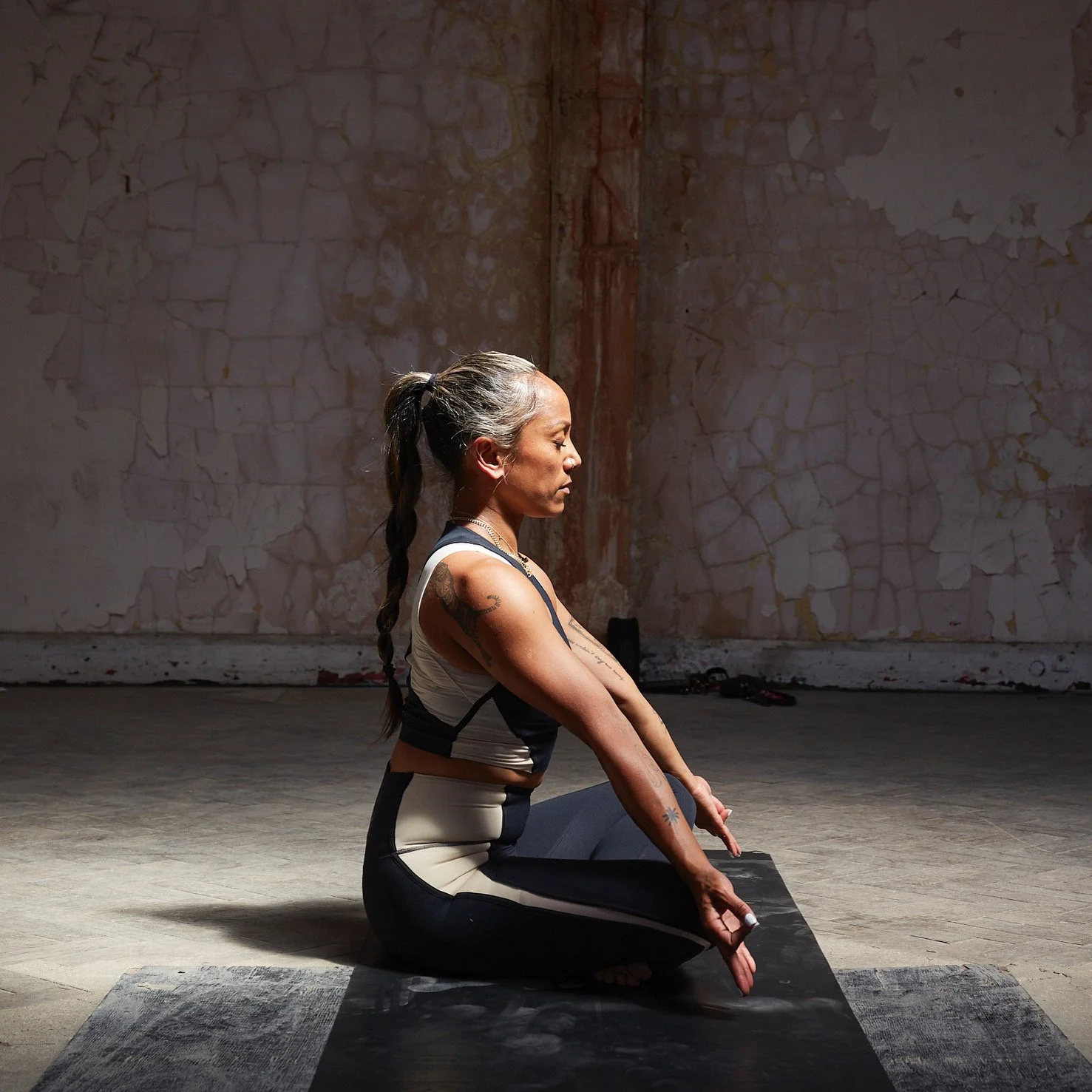
That's where the name came from. Rogue, because we were doing it differently. Room, because it was never about the individual. It was about what happens collectively when people feel safe enough to let go.
The idea
What if wellness felt like belonging instead of self-improvement? What if we removed every barrier the industry had built? No dress code. No purity test. No performance of perfection. Just music, light, movement, and human connection. The dance floor as a model for practice. The nightclub as a model for community.
As my values aligned more with this third room than the media parties and superficial world of fashion I had come to know, my desire to create the space I'd spent my life searching for as a woman of colour became impossible to ignore.
The first Rogue Room class happened in RM1 at fabric nightclub. Not a studio. Not a Sunday morning. The room where people would be going off later that night.
Same soundsystem.
Same low light.
Same energy.
Just bodies on mats instead of bodies on the dance floor.
Tickets sold out in 15 hours. People cried. They wore masks (it was Covid, not Eyes Wide Shut) Strangers hugged each other. Friends came back bringing more friends. That basement became proof of concept for something much bigger: people weren't searching for wellness. They were searching for connection.
My daughter, the reason
People ask how I balanced building a business while raising a daughter. The truth is: she became the reason I kept going.
I want her to grow up never believing she has to shrink herself to enter a room. I want her to see possibility before permission. I want her to see her mother do the thing so the thing becomes possible. I want her to understand that if the space you need doesn't exist yet, you can build it yourself.
The Rogue Room is for her. And for everyone who has ever been told directly or indirectly that the room they wanted to enter wasn't built for them. Then build your own.
What rebellion actually means
Rebellion was never branding for us. It was philosophy. We rejected the idea that wellness had to:
look exclusive
perform purity
aestheticise healing
worship perfection
belong to a certain kind of person
We built a space for people who never saw themselves reflected in traditional wellness culture. A place where science and nightlife could coexist. Where movement could feel emotional. Where wellbeing could feel communal. Five years on, the world is finally moving toward what we believed all along:
People don't heal in isolation. They heal in connection.
We didn't predict the shift. We simply refused to build the room the old way. It's been five years of rebellion.